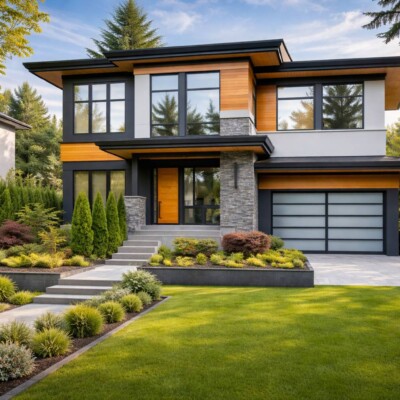
Today, interior design is not about the amount of décor, but about the quality and tactility of materials. We’ve selected 5 key trends that combine aesthetics with practicality.
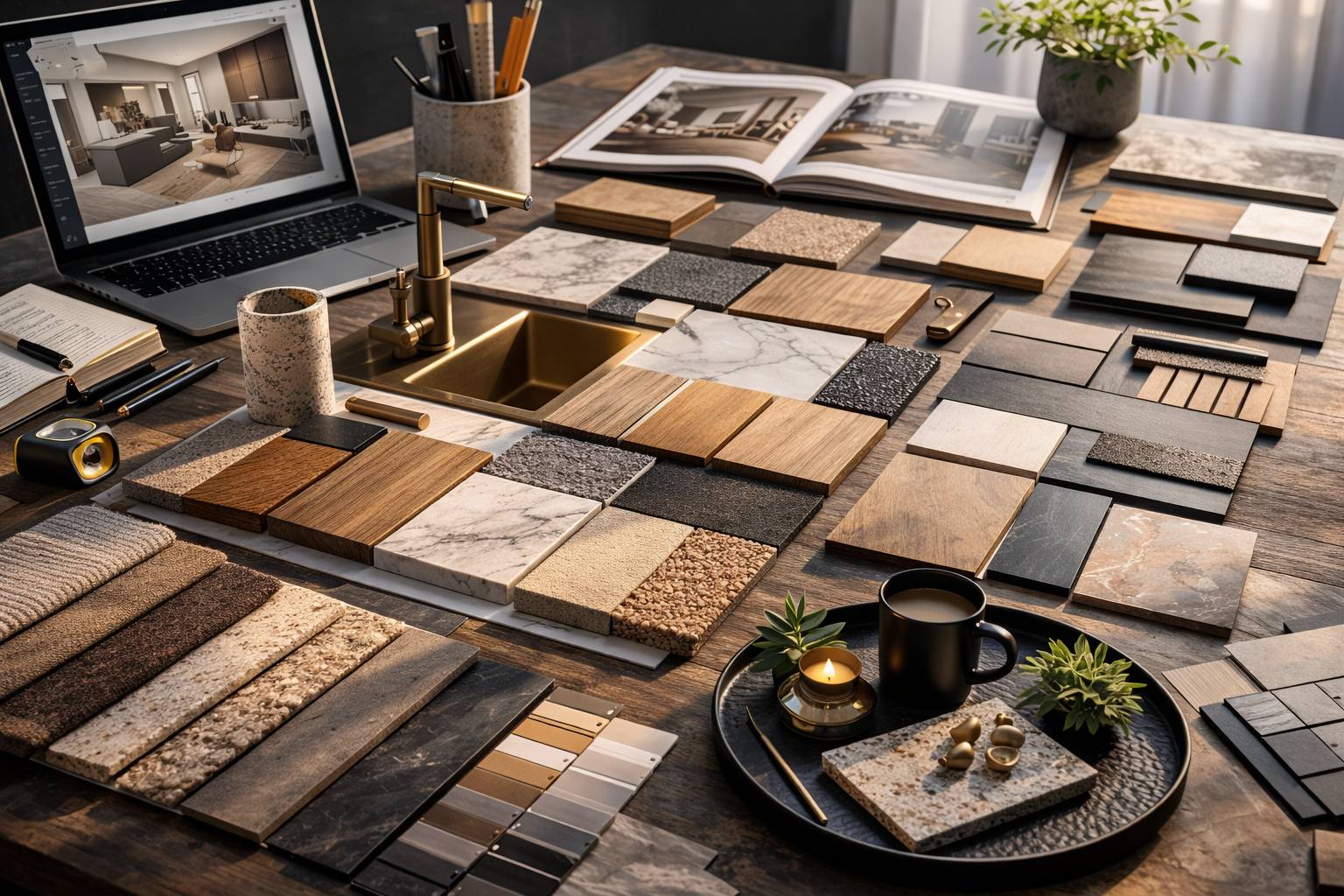
1. Microcement and Architectural Concrete
This is the perfect solution for those who dislike tile joints. Microcement creates a seamless surface on floors, walls, and even in shower areas.
Why it’s great: It is extremely durable, moisture-resistant, and visually expands the space.
Architect’s tip: Use it in bathrooms and entryways to create a “monolithic” space effect.
2. Matte Veneer and “Natural” Wood
Glossy furniture is finally a thing of the past. Today, the trend is natural wood with a pronounced texture (oak, walnut), finished with matte lacquer or oil.
Why it’s great: Wood adds warmth to minimalist interiors. Veneer wall panels are also an excellent solution for sound insulation and adding a premium feel.
Architect’s tip: Combine vertical wooden panels with hidden lighting.
3. Natural Stone and Its Technological Alternatives (Porcelain Stoneware)
Marble, travertine, and quartzite remain favorites. However, large-format materials (such as 120×280 cm porcelain slabs) that mimic solid stone are especially popular now.
Why it’s great: Minimal joints — maximum aesthetics. Quartz composite countertops are scratch-resistant and do not absorb wine or coffee.
Architect’s tip: Use the same stone for both the countertop and the backsplash to create a cohesive, high-end look.
4. Metal: Anodized Aluminum and Brass
Metal is no longer just for hardware. It is now used for slim partitions, furniture accents, and flush-mounted baseboards.
Why it’s great: Thin black aluminum profiles add a graphic edge, while warm brass or copper introduces accents in a “quiet luxury” style.
Architect’s tip: Flush-mounted aluminum baseboards allow furniture to sit tight against the wall and create a “floating wall” effect.
5. Smart Textiles (Bouclé and Linen)
Bouclé fabric, with its distinctive looped texture, became a symbol of comfort in 2025–2026.
Why it’s great: It’s highly tactile. Modern fabrics often feature Easy Clean coatings, making even light-colored sofas easy to maintain.
Architect’s tip: Don’t be afraid of light shades if you choose high-quality, technologically advanced textiles.
Share: